
Renaissance
Florence, 1420: ancient Greece walked back into the painter's studio and changed everything.
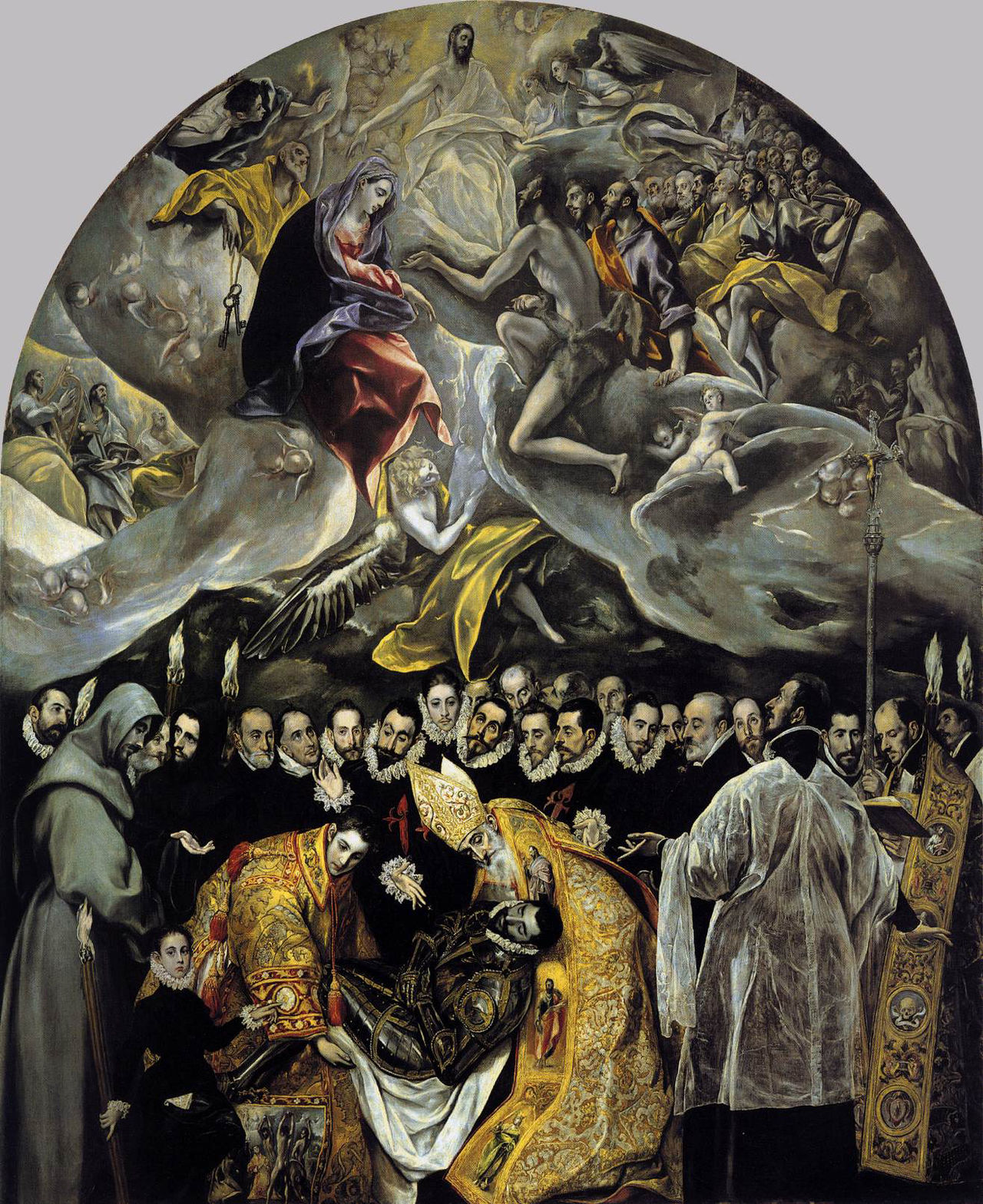
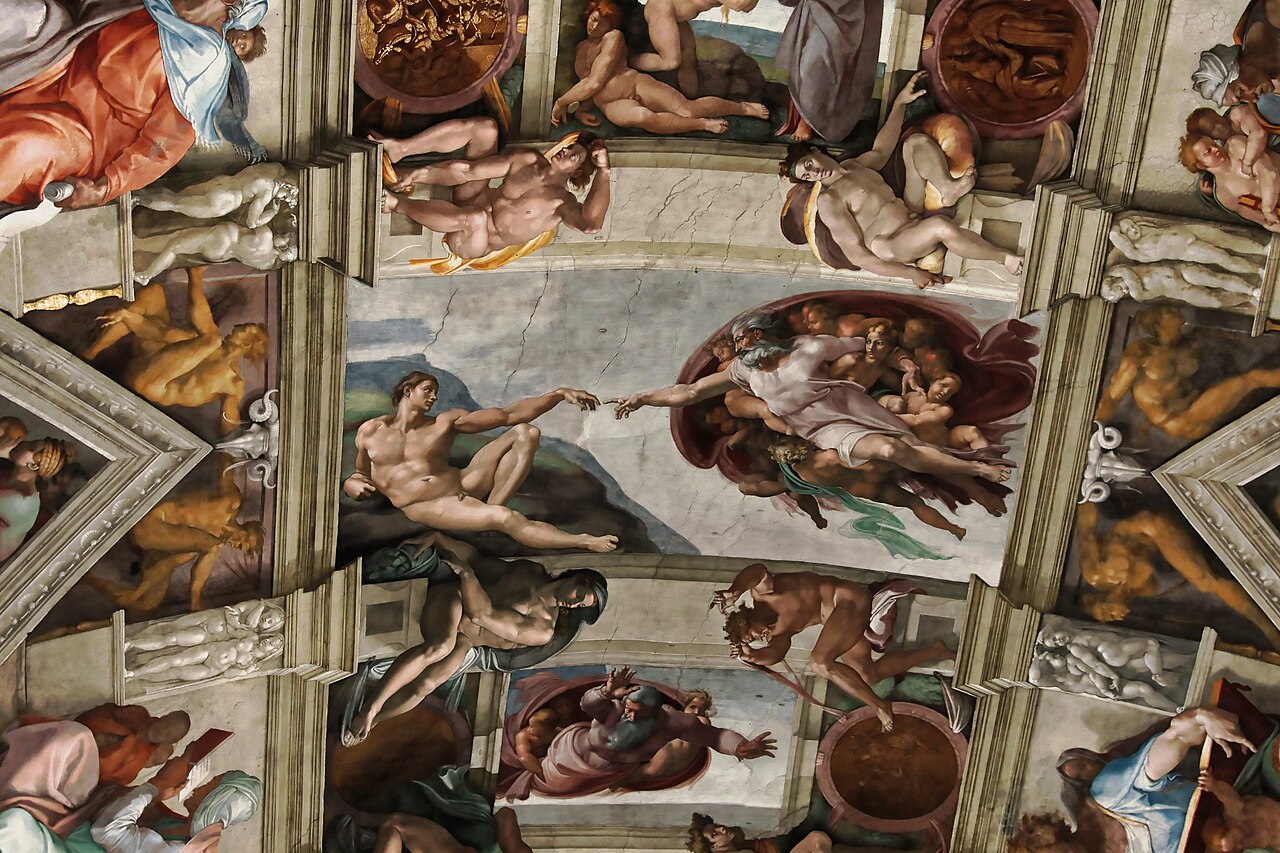
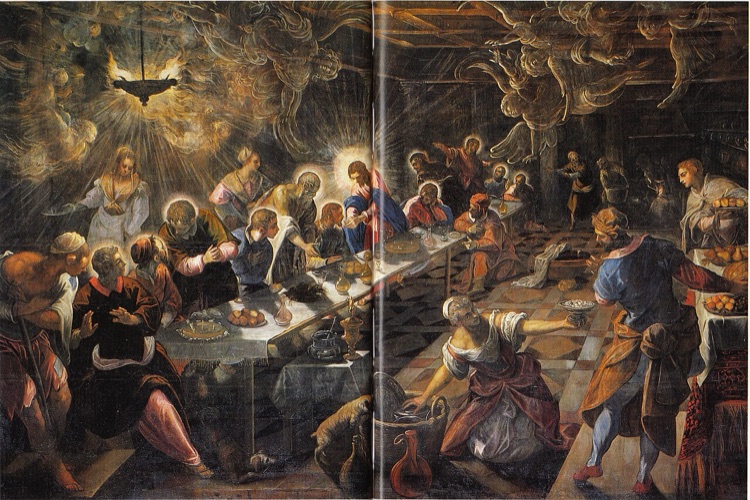
In 1425, a young Florentine mason's son named Masaccio climbed a scaffold in the Brancacci Chapel and did something no European painter had done in over a thousand years: he painted figures that cast shadows on the ground beneath them, bodies that occupied three-dimensional space the way bodies do in the real world. The *Trinity* fresco in Santa Maria Novella followed a few years later, using Brunelleschi's newly formulated rules of linear perspective to conjure a vaulted barrel arch so convincing that contemporaries reportedly tapped the wall to check whether it was real. The Renaissance was already underway before anyone had a name for it. Born in the workshops of Florence in the early fifteenth century, it spread to Venice, Rome, Milan, and ultimately across the Alps to become the longest and most geographically ambitious stylistic revolution in Western painting. By the time Leonardo was fusing science and beauty in the *Last Supper* (1495–98) and Michelangelo was turning the Sistine Chapel ceiling into the largest single argument ever made for the dignity of the human body, the movement had produced a canon of masterworks that later centuries would spend three hundred years trying to equal. Its closing movement — Mannerism, in the hands of Pontormo, Bronzino and El Greco — stretched Renaissance ideals until they became their own deliberate argument for artifice.
Origin and history
The Renaissance began in Florence in the early fifteenth century, and it began, as revolutions often do, with a competition. In 1401, the Cloth Merchants' Guild announced a contest for the design of new bronze doors for the Florence Baptistery. Lorenzo Ghiberti won; his rival Brunelleschi lost and channelled his frustration into architecture and optics, eventually working out the mathematical laws of linear perspective — the technique that would allow painters for the next five centuries to create convincing three-dimensional space on a flat surface. Perspective was the movement's founding technology, and it arrived before most of its greatest paintings.
Why Florence? The city was the wealthiest in Europe, run by wool and banking dynasties — above all the Medici — who competed to demonstrate their culture and piety through artistic patronage. Cosimo de' Medici funded the rebuilding of San Lorenzo and kept Donatello on a kind of artistic retainer; his grandson Lorenzo surrounded himself with Botticelli, Ghirlandaio, the young Michelangelo. The Florentines were also unusually obsessed with classical antiquity. Roman ruins were everywhere in Italy, but Florence's humanist scholars — Petrarch a generation earlier, then Bruni, Ficino, Pico della Mirandola — had convinced educated Florentines that Greece and Rome represented an intellectual and aesthetic peak that the medieval centuries had catastrophically abandoned. Painting's job was to recover that peak.
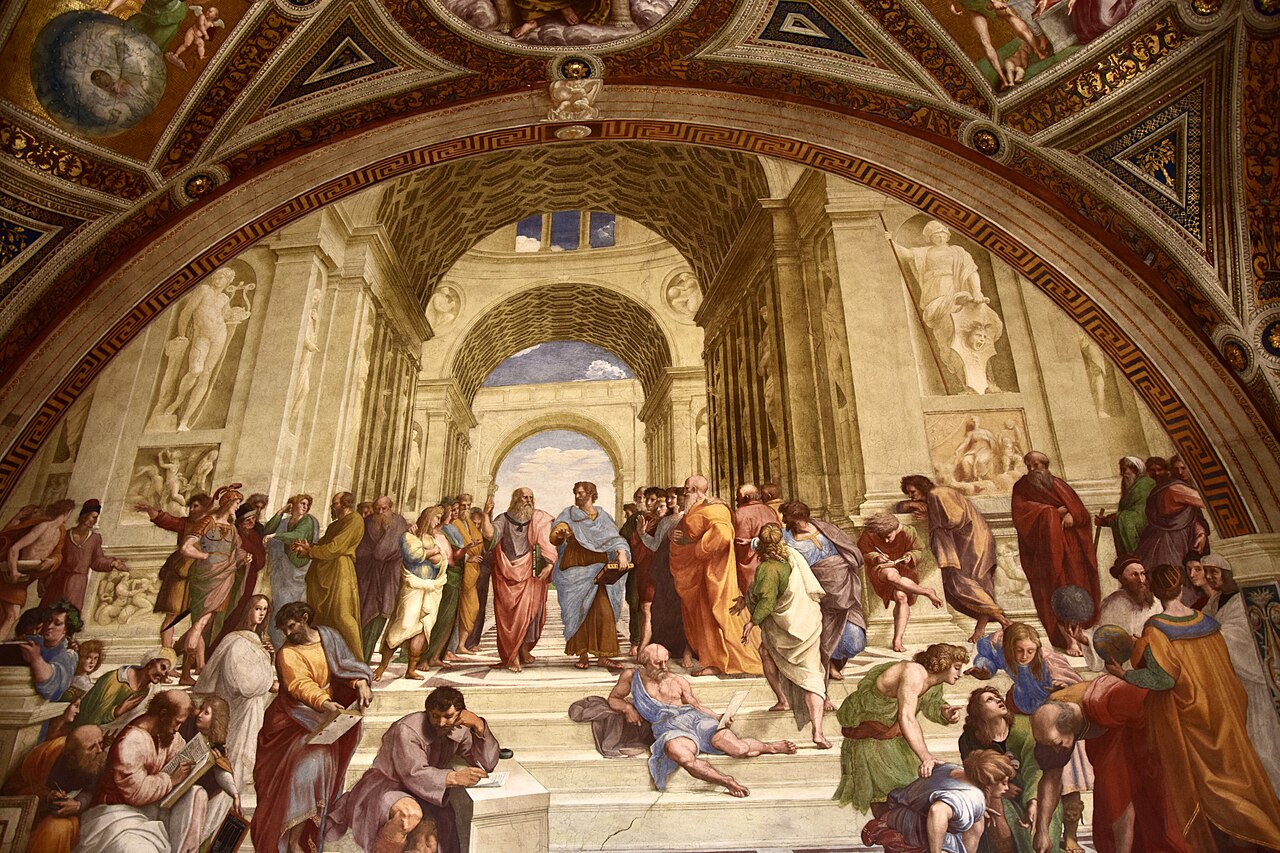
Masaccio died at twenty-six, in 1428, having barely begun. But his Brancacci Chapel frescoes were studied by every important Florentine painter for the next century, as Vasari later recorded. Piero della Francesca took the geometry further in Arezzo and Urbino, building figures of almost crystalline solidity from light and shadow. Andrea Mantegna brought the classical vocabulary north to Mantua, painting foreshortened figures that could have stepped off Roman sarcophagi. By the 1490s the first generation had handed on its discoveries to the three painters who would define what later critics called the High Renaissance: Leonardo in Milan and Florence, Michelangelo in Florence and Rome, Raphael moving between the two cities until Pope Julius II summoned him to Rome to paint the Vatican Stanze. The concentration of ambition and talent in Rome between 1505 and 1520 was probably unparalleled in Western art history.
Concept and philosophy
The Renaissance painters did not think of themselves as starting a movement. They thought they were recovering lost knowledge — specifically the knowledge that ancient Greece and Rome had possessed and the medieval centuries had forgotten. This conviction shaped everything they did.
First, that the human body is the central subject of art. Not because humans are more important than God, but because — for Renaissance humanists — the body was the most intricate and glorious evidence of God's creative intelligence. Michelangelo's Sistine Adam and Raphael's School of Athens figures are theological statements dressed as aesthetic ones: the body, understood correctly and rendered correctly, reveals the divine order behind it. Anatomy became a near-sacred discipline. Leonardo dissected dozens of corpses; Michelangelo's knowledge of musculature was so profound that modern anatomists still study his drawings.
Second, that geometry is beauty. The Renaissance inherited from antiquity the belief that ideal proportion — the *Golden Ratio*, Vitruvius's theory of the human body as geometric module — was not a convention but a law of nature. Painters organised their compositions into triangles, circles, and interlocking geometric frameworks. Leonardo's *Vitruvian Man* is the iconic statement of this belief; Raphael's *Madonna of the Meadow* (1506), with its flawlessly triangulated figures, is its most beautiful painting.
Third, that painting should narrate with the seriousness of classical literature. The Renaissance raised the status of history painting — scenes from mythology, ancient history, the Bible — above all other genres. A painting of the Annunciation or the Battle of Cascina was not decoration; it was a moral and intellectual argument in visual form, requiring the same learning from painter and viewer as a Latin poem required from writer and reader.
Fourth, that these ideals could be pushed until they began to question themselves. The generation that followed the High Renaissance masters — Pontormo, Rosso Fiorentino, Bronzino, and later El Greco — inherited a tradition that had achieved apparent perfection, and responded by deliberately distorting it: elongating figures, acidifying colour, twisting compositions into impossible elegance. This is Mannerism, the Renaissance's brilliant, restless coda.
How to recognise it
Six visual signatures that travel across the entire arc of Renaissance painting, from Masaccio's Brancacci Chapel to Bronzino's Florentine court portraits.
- Convincing three-dimensional space — Figures occupy real space — they cast shadows, overlap each other, and recede into the distance according to the rules of linear perspective. The horizon line is always present; buildings and floors are drawn to a vanishing point. If the painted space feels like you could walk into it, you are in Renaissance territory.
- Geometric, centred composition — The Renaissance organises its figures into triangles, circles, and stable pyramidal groupings, usually balanced around a central axis. Raphael's triangulated Madonnas are the archetype; even a crowded *Last Supper* or *School of Athens* resolves, on examination, into interlocking geometric order.
- Idealised but weighty bodies — Figures are beautiful — proportioned according to classical ideals — but they have genuine mass and volume. Drapery folds under gravity; muscles are anatomically credible; feet touch the ground convincingly. The body is idealised upward from the real, not invented from nothing.
- Even, diffused light — Renaissance light is typically even and ambient rather than dramatic. There are shadows, but they are modelled and graduated; no figure is swallowed in darkness. The world appears seen in full daylight, every surface legible. This changes sharply in Mannerist works, where lighting grows stranger and more selective.
- Classical architectural setting — Arches, loggie, columns with Corinthian capitals, marble floors with geometric inlay — the architectural backdrop in Renaissance painting is a grammar of antiquity. Even rural Madonnas often sit before an arch or a classical ruin, placing the sacred image in conversation with Rome.
- Mannerist distortion as counter-signal — In the movement's late phase, look for the opposite of Renaissance harmony: figures with *impossibly* elongated necks and torsos, poses of studied artificiality, acidic palettes of cool silver-green and rose. Pontormo's *Deposition* (c.1528) and Bronzino's *Allegory with Venus and Cupid* (c.1545) are the clearest examples — painting that knows the Renaissance rules by heart and breaks them on purpose.
Anecdotes and curiosities
Michelangelo spent four years horizontal on a scaffold, and hated every day of it. Pope Julius II commissioned the Sistine Chapel ceiling in 1508; the painter signed the contract under protest, insisting he was a sculptor, not a fresco painter. He dismissed the assistants Ghirlandaio had sent him after a few weeks and worked largely alone, often in conditions so uncomfortable that he later joked his eyesight had been permanently damaged from reading letters with the text held overhead. When Julius impatiently asked when the ceiling would be finished, Michelangelo reportedly told him: "When it is done." The ceiling was unveiled in October 1512, covering some 500 square metres with more than 300 figures — a programme of such ambition that later artists spoke of it simply as "the ceiling," as if there were only one in the world.
**Leonardo left the *Last Supper* unfinished for years — and invented a technique that would destroy it.** Milan's Duke Lodovico Sforza commissioned the refectory mural in 1495. Rather than use true fresco — which required painting onto wet plaster in sections and left no room for revision — Leonardo experimented with an oil-and-tempera mixture applied to a dry wall. It allowed him to revise and rethink obsessively, exactly the way he preferred to work. But it also meant the paint began to flake within twenty years of completion. By 1556 Vasari described it as "so ruined that one can make out nothing." Every subsequent restoration — and there have been many — has been partly guesswork. What survives today is as much the work of restorers as of Leonardo himself.
Raphael ran the most successful artistic enterprise in Rome, and died at thirty-seven. In the decade between his arrival in Rome (1508) and his death on Good Friday 1520, Raphael produced the Vatican Stanze frescoes, dozens of altarpieces, cartoons for the Sistine tapestries, and portraits of popes and cardinals, while simultaneously supervising work on St. Peter's Basilica. He did this with a studio of fifty-odd assistants whom he trained and directed with an organisational intelligence as impressive as his brushwork. Vasari, who was eight years old when Raphael died, wrote that Rome felt his loss "as if it had lost the sun." His body lay in state in the Vatican before burial in the Pantheon, where he had asked to be interred beside the antique gods he had spent his life studying.
The Medici nearly destroyed the young Michelangelo's best early work — then saved it. In 1494, with the Medici expelled from Florence by a popular uprising, a mob ransacked the Palazzo Medici. Michelangelo's *Hercules* — a life-size marble made for the family's garden — was seized and eventually sold, passing through French hands before disappearing entirely; its current whereabouts are unknown. Michelangelo himself had fled Florence the previous year, apparently warned by a ghost (or by Piero de' Medici, accounts differ) that the family's fall was imminent. He left behind the *Battle of the Centaurs* relief, today in the Casa Buonarroti — the earliest surviving work that shows unmistakably who he was going to become.
Legacy and influence
The Renaissance effectively set the curriculum of Western painting for four hundred years. Every European painter trained between roughly 1520 and 1900 learned to draw from antique sculpture and from Renaissance masters; studied anatomy; organised compositions into geometric order; and regarded history painting — narrative scenes from the Bible, mythology, or classical history — as the highest possible ambition. Academic painting institutions, from the French Royal Academy to the nineteenth-century British Royal Academy, were designed as machines for transmitting Renaissance values into new centuries.
The movement's legacy is also surprisingly alive in unexpected places. Perspective — the Renaissance's founding invention — is the mathematical principle underlying every camera lens and every computer-generated scene in cinema. The Raphael cartoon tradition fed directly into Victorian narrative painting and from there into illustrated books and graphic storytelling. Even Michelangelo's insistence on anatomy as the foundation of figure drawing survives in every life-drawing class taught today. The Renaissance did not just produce great paintings; it built the intellectual architecture inside which Western art made sense of itself for half a millennium.
9 artists in this movement
From the blog
Frequently asked questions
When did the Renaissance begin and end?
Italian art historians typically date the Renaissance from the early 1400s — the decade of Masaccio's Brancacci frescoes and Brunelleschi's perspective experiments — to around 1527, when the Sack of Rome scattered the High Renaissance community of artists. The High Renaissance, the brief, most celebrated phase, runs roughly 1490–1527. The Northern Renaissance ran from the 1430s (Jan van Eyck) through roughly 1600. Mannerism, the final phase in Italy, extended into the early seventeenth century before the Baroque decisively replaced it.
Who are the most important Renaissance painters?
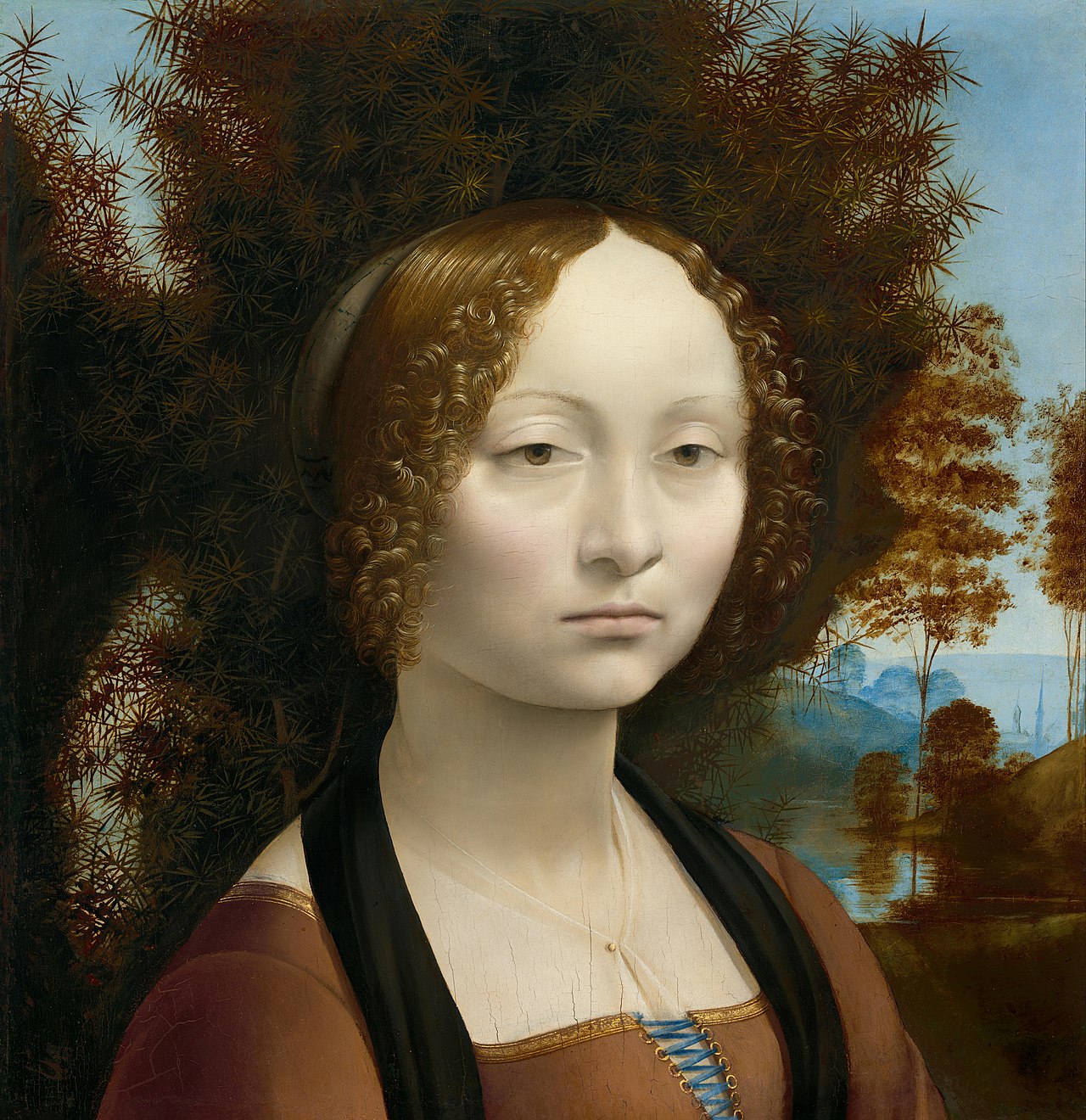
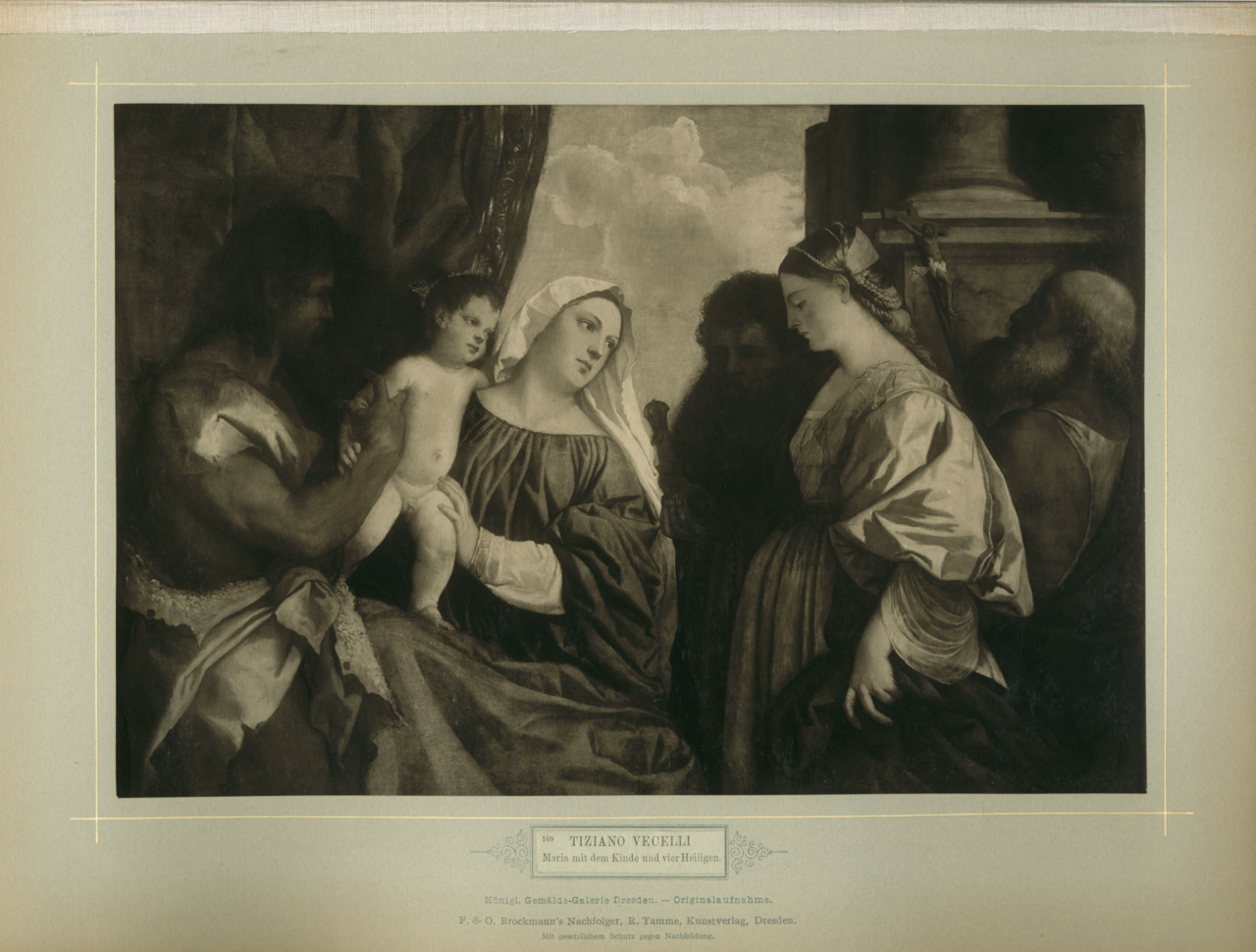
The canonical Italian High Renaissance trio is Leonardo da Vinci (1452–1519), Michelangelo Buonarroti (1475–1564) and Raphael Sanzio (1483–1520). Behind them: Masaccio (the founder, 1401–1428), Piero della Francesca (1415–1492), Sandro Botticelli (1445–1510), Andrea Mantegna (1431–1506) and — for Venetian painting — Giovanni Bellini (c.1430–1516) and Titian (c.1490–1576). In the Mannerist coda: Pontormo, Bronzino and the extraordinary El Greco.
What technique is most associated with the Renaissance?
Linear perspective — the mathematical system, developed in Florence around 1420, for projecting three-dimensional space onto a flat surface — is the Renaissance's signature intellectual achievement. Equally central is sfumato, Leonardo's technique of blurring outlines with imperceptible tonal transitions to create depth and atmosphere; and chiaroscuro, the modelling of form through graduated light and shadow. In Venice, Titian and Giorgione developed a richer, more painterly approach based on *tonalismo* — building form through colour rather than line.
How does the Renaissance differ from the Baroque that followed it?
The Renaissance valued harmony, balance and idealised beauty — even light, stable composition, bodies in classical proportion. The Baroque, beginning around 1600, deliberately broke that balance: dramatic spotlighting from a single source, diagonal and unstable compositions, real-looking models with dirty feet and calloused hands, figures caught in a moment of violent action. Where a Renaissance Madonna sits enthroned in geometric calm, a Baroque Magdalene convulses in candlelit darkness. Both are masterful; they simply have opposite emotional goals.
Why is it called the 'Renaissance'?
The word means 'rebirth' in French, from the Italian *rinascita*. The term was first used systematically by the art historian Giorgio Vasari in his 1550 *Lives of the Artists*, where he described the arc from Cimabue to Michelangelo as a recovery — a *rinascita* — of the standards of ancient Greek and Roman art. The Renaissance painters themselves used the metaphor of waking from a long sleep; they genuinely believed medieval art was a degraded interruption of a classical peak that they were restoring.