Anthony van Dyck
The Flemish prodigy who made kings look divine and transformed European portraiture for two centuries.
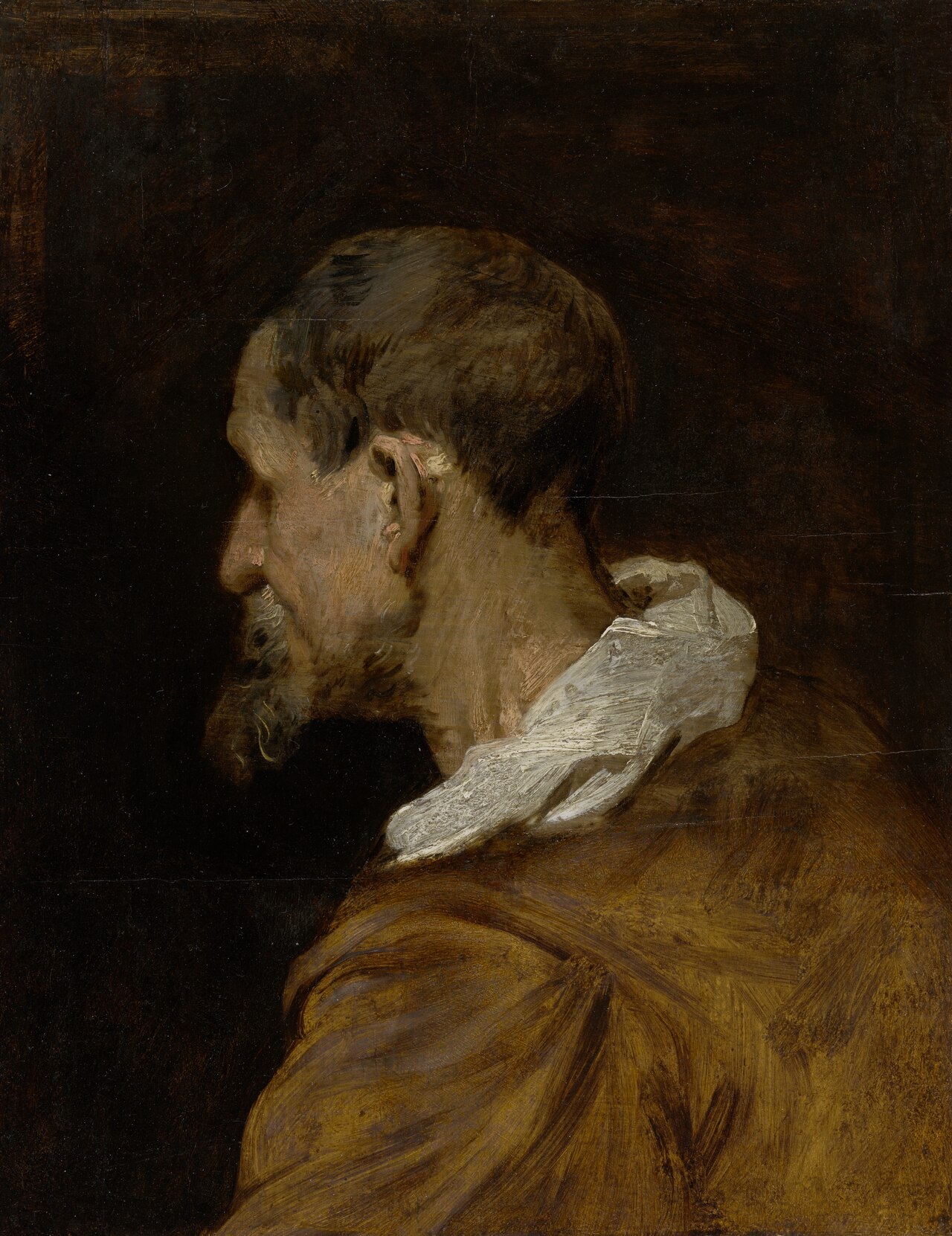
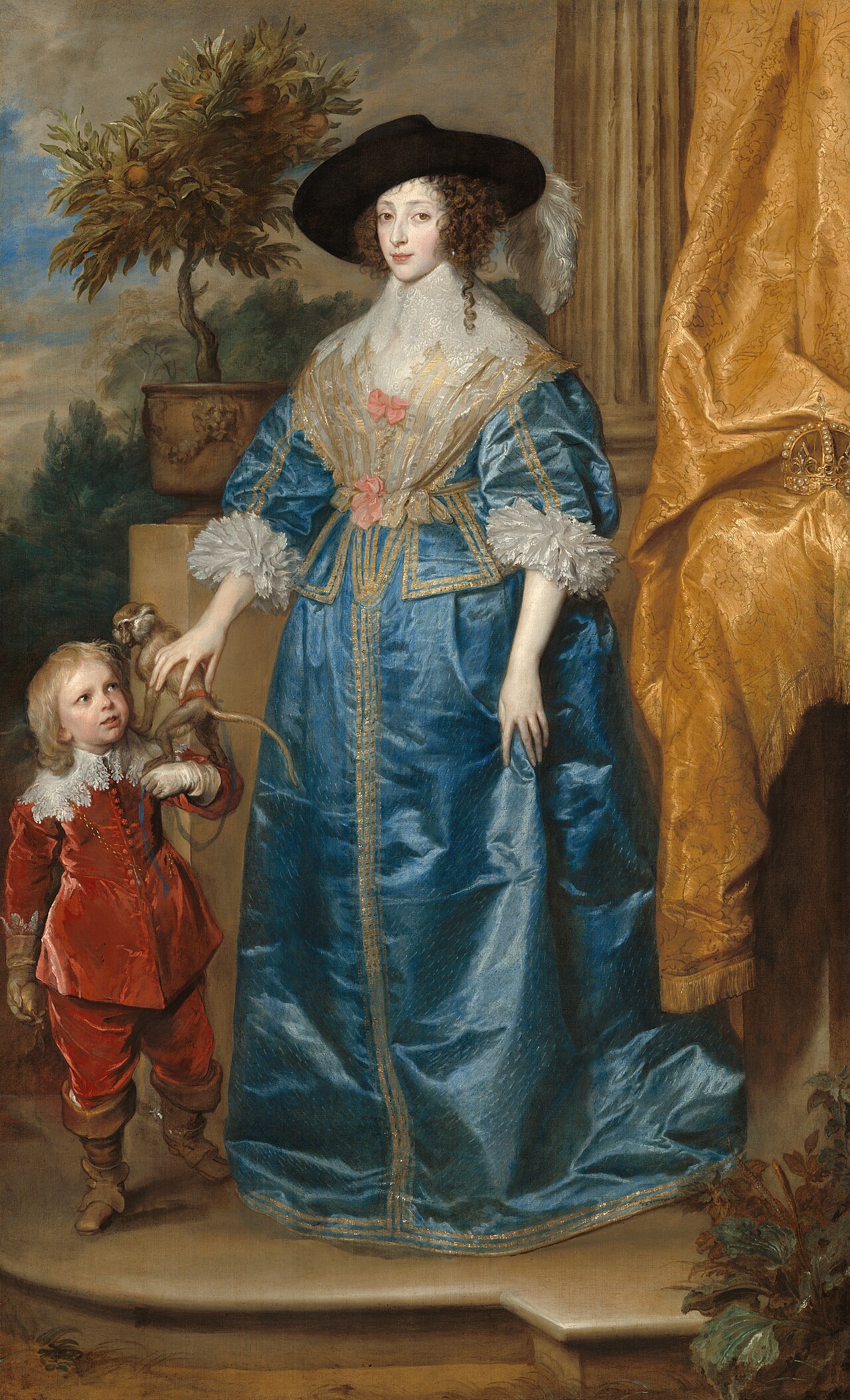
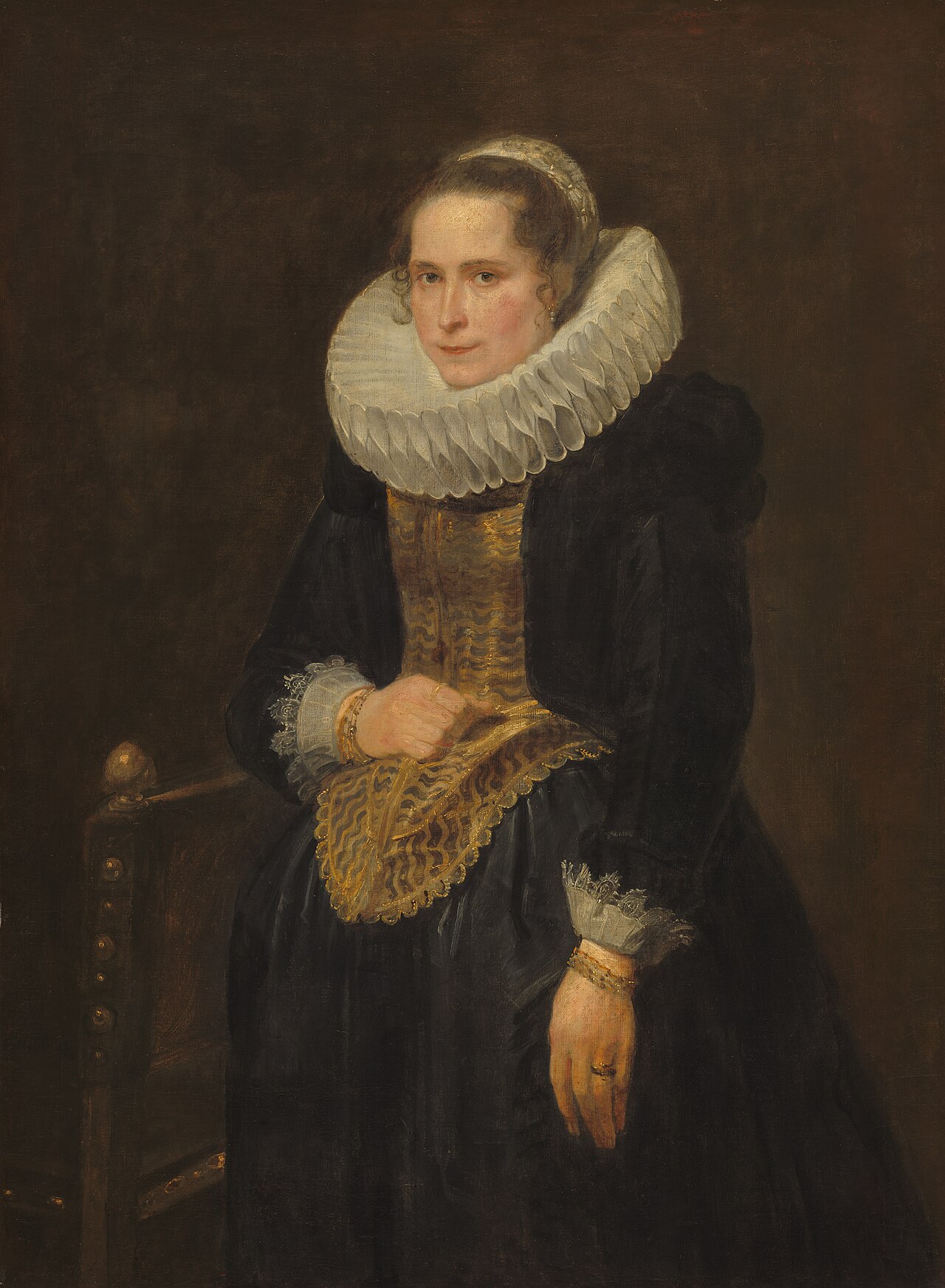
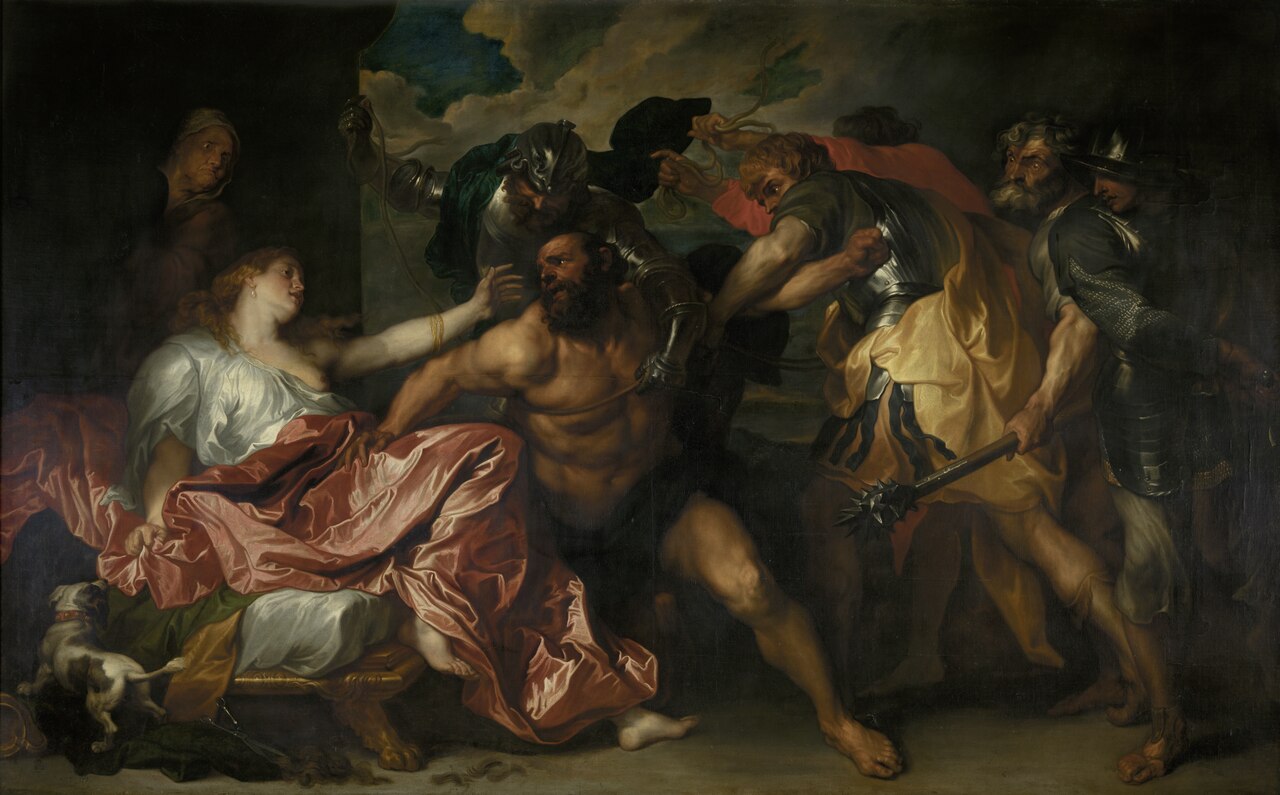
Style and technique
Van Dyck paints authority as if it were a natural phenomenon — not earned, not performed, simply present, like weather. His sitters appear to have been born already composed, already draped in the particular light that falls across their shoulders and collects in the folds of their silk. The technique is, at its core, an act of strategic flattery conducted with total pictorial conviction, and it is impossible to separate the two.
The formation happened fast, and it happened in the best possible school. By the age of twenty he was working in Peter Paul Rubens's studio in Antwerp, not as a mere assistant but as a trusted collaborator capable of completing entire passages of large-scale canvases. From Rubens he absorbed everything that the mature Flemish Baroque had to offer: the warm ground preparation, the loose, confident brushwork in the lights, the way flesh could be made to glow against dark backgrounds. But Van Dyck was never Rubens's echo. Where Rubens exults in physical mass and the drama of bodies pressed together, Van Dyck thins things down. His figures are taller, cooler, more self-contained — aristocratic in bearing even when they are saints or sinners.
The Italian years, from 1621 to 1627, were the second great education. He worked in Genoa, Rome, Venice, Palermo, studying Titian with an attention that bordered on obsession. What he took from Titian was not the mythology — he left that largely to Rubens — but the handling of colour as atmosphere: the way a warm shadow could hold the whole temperature of a painting in equilibrium, the way silver-grey and golden-amber could be played against each other across a large canvas without the image going flat or dead.
Four marks define his mature manner.
Silk as psychology. No painter before or after Van Dyck has rendered expensive fabric with such analytical depth. The sheen on a satin sleeve, the slight crush at an elbow, the way light catches the warp of a heavy brocade — these are not decorative flourishes but information about the sitter's position in the world. To paint the clothes this well is already to say something about who deserves to wear them.
The elongated hand. His sitters' hands are invariably long-fingered, tapered, almost impossibly refined. They hold gloves, rest on pommels, touch table edges with the tips of three fingers. These hands are an argument: that breeding produces a particular kind of body, and that this body is the outward sign of an inner distinction.
Light from a single high source. He almost always works with a strong directional light entering from the upper left, which creates a long shadow falling across the lower portion of the figure and allows the face to be picked out against a darker ground. This is a studio convention inherited from Titian and Rubens, but Van Dyck uses it with surgical consistency — the face is always the brightest object in the picture, never competing with the accessories.
The unfinished background as emotional register. His backgrounds are often little more than suggestions — a dark curtain, a column base, an open sky with gathering cloud. They are never accidental. The landscape that opens behind the sitter in his English portraits is always slightly turbulent, slightly romantic, providing an implicit narrative of consequence and event around a figure who outwardly projects only stillness.
He died at forty-two, having spent his English decade almost entirely in the service of a court that was itself approaching catastrophe. His portraits of Charles I shaped the visual image of sacred kingship so powerfully that when the republic executed the king in 1649, it was Van Dyck's image of him that the royalists mourned alongside the man. That is the measure of what he did: he made paintings that outlived their subjects and continued to argue on their behalf.
Life and legacy
He was born on 22 March 1599 in Antwerp, the seventh of twelve children of Frans van Dyck, a prosperous silk merchant, and Maria Cuperus. The family was wealthy enough to provide a thorough education, and Anthony showed ability as a draughtsman early enough that his father apprenticed him, at approximately ten years old, to the painter Hendrick van Balen, one of Antwerp's most accomplished figure painters. By 1615, when he was sixteen, he was already running his own workshop — an exceptional circumstance that the Antwerp guild records confirm — and accepting commissions in his own right.
The gravitational event of his early career was his entry into the orbit of Peter Paul Rubens. Exactly when and how the collaboration began is not entirely clear, but by 1617–18 Van Dyck was sufficiently trusted to execute major passages in Rubens's large altarpieces and hunting scenes. Rubens himself acknowledged the relationship publicly, writing to a patron in 1618 that his young associate was 'the best of my pupils'. The two men painted side by side, and Van Dyck absorbed both the technique and the ambition of the older master, while already showing signs of moving in a distinctly different direction — more refined, more intimate, more interested in individual psychology than in monumental spectacle.
In 1620–21 he made a brief first visit to England, spending several months at the court of King James I, where he was employed by Thomas Howard, Earl of Arundel, one of the greatest collectors of the age. The visit was formative in showing him what royal patronage could mean for a painter's career, though his real transformation came when he left for Italy in late 1621. He based himself principally in Genoa, where the city's noble families — the Spinola, the Doria, the Cattaneo — provided him with a continuous stream of portrait commissions. His Genoese portraits are among the grandest things he ever made: large-format, full-length images of patricians and their wives, the scale and setting designed to match the ambition of the palaces they would hang in.
He travelled through the peninsula throughout this period, spending time in Rome, Florence, Venice, and Palermo, where he contracted a serious illness, possibly the plague, in 1624. He recovered, and his time in Venice deepened his engagement with Titian in ways that would determine the colour and atmosphere of his work for the rest of his life. He returned to Antwerp in 1627, now in his late twenties, and immediately consolidated his position as the leading portraitist of the southern Netherlands. He was received at the court of the Archduchess Isabella Clara Eugenia, the Spanish Habsburg governor of the region, who became one of his patrons. He also returned to religious and mythological painting during these Antwerp years, producing large altarpieces for churches across the region.
In 1632, at the invitation of King Charles I of England, he crossed the Channel and was appointed Principal Painter in Ordinary to the king, given a studio and a salary, and awarded a knighthood — becoming Sir Anthony van Dyck within months of his arrival. What followed was the most celebrated decade of royal portraiture in British history. He painted Charles I in armour on horseback, Charles I hunting, Charles I in the triple portrait sent to Rome to guide Bernini's work on a marble bust, Charles I and Henrietta Maria together. He painted the queen's ladies, the court's dignitaries, the king's horses. He painted with a productivity that seems impossible — more than thirty major portraits survive from the English years — while maintaining standards that almost never drop.
His personal life during this period is partly documented and partly speculative. He maintained a studio in Blackfriars in London and a summer house in Eltham. In 1639 he married Mary Ruthven, a Scottish lady-in-waiting to the queen, a marriage that appears to have been arranged at least partly with royal encouragement. The couple had one daughter, Justiniana, born in December 1641, one week before Van Dyck died.
In his final year he attempted to secure the commission to decorate the Banqueting House in Whitehall — the ceiling already painted by Rubens — and made a trip to Paris in the hope of obtaining work from Cardinal Richelieu. Neither project came to fruition. His health had been declining for some months, and he died on 9 December 1641 in Blackfriars, at the age of forty-two. He was buried in Old St Paul's Cathedral in London, a church destroyed by the Great Fire of 1666. The king, who had shown him unusual personal favour throughout the decade, arranged and contributed to the funeral.
Five famous paintings
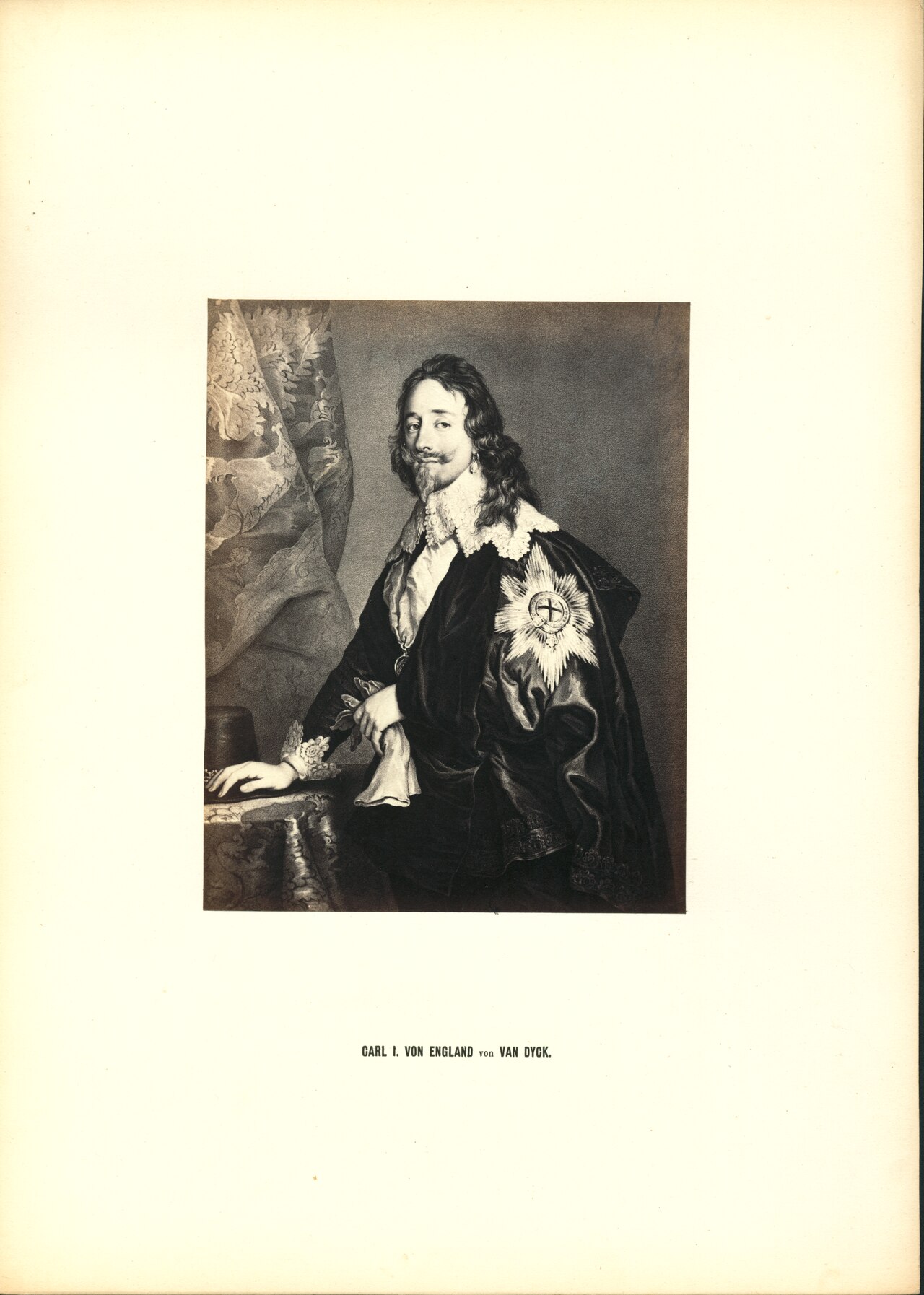
Charles I of England (from Album) 1635
This intimate yet commanding study of Charles I belongs to the sequence of royal likenesses Van Dyck produced after 1632 and anticipates the famous triple portrait of the same year. Painted on panel and measuring approximately 26 × 20 cm, it was part of a presentation album of royal images, intended to circulate among courts and ambassadors as a diplomatic instrument. The king is shown in three-quarter view, wearing a plain falling collar and a dark doublet — conspicuously unadorned by armour or robes of state — which throws the intensity of the face into sharp relief. Van Dyck's handling of the eyes is characteristic: the gaze is directed slightly past the viewer, composed and inward, suggesting self-possession rather than engagement. The paint is thin and rapid in the background, concentrated and precise at the face and collar. Now in the Royal Collection at Windsor, it serves as a document both of Van Dyck's prodigious facility and of Charles I's deliberate cultivation of a meditative, almost melancholic image of kingship — an image that would haunt his memory long after his execution in 1649.
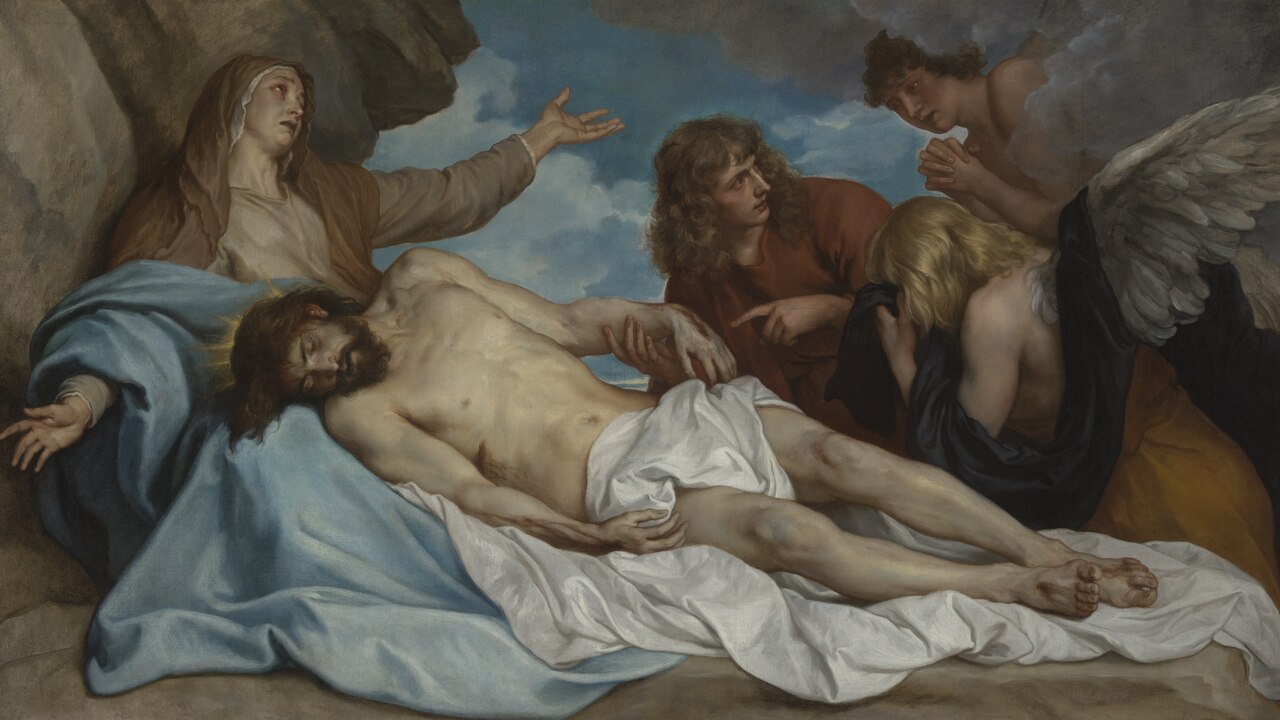
The Lamentation of Christ 1635
This late devotional painting, oil on canvas at approximately 115 × 208 cm, is one of Van Dyck's most sustained achievements in religious narrative and now hangs in the Kunsthistorisches Museum in Vienna. The horizontal format forces the viewer to read the scene as a frieze: the dead Christ stretches across the centre, his weight distributed between the arms of Joseph of Arimathea above and the lap of the Virgin below. Van Dyck's Rubensian formation is fully audible here — the handling of Christ's torso, the way the cold grey-white of the body is warmed by the surrounding figures — but the emotional register is quieter, more interior than anything Rubens typically permitted himself. The Magdalene at the lower right, pressing her cheek to Christ's hand, is one of the most carefully observed passages of grief in seventeenth-century painting. The light throughout is Venetian in origin: warm, directional, picking out foreheads and hands while allowing the rest to dissolve into a rich penumbra. Van Dyck returned to the Lamentation theme multiple times across his career; this version represents the resolution of all that accumulated thinking.
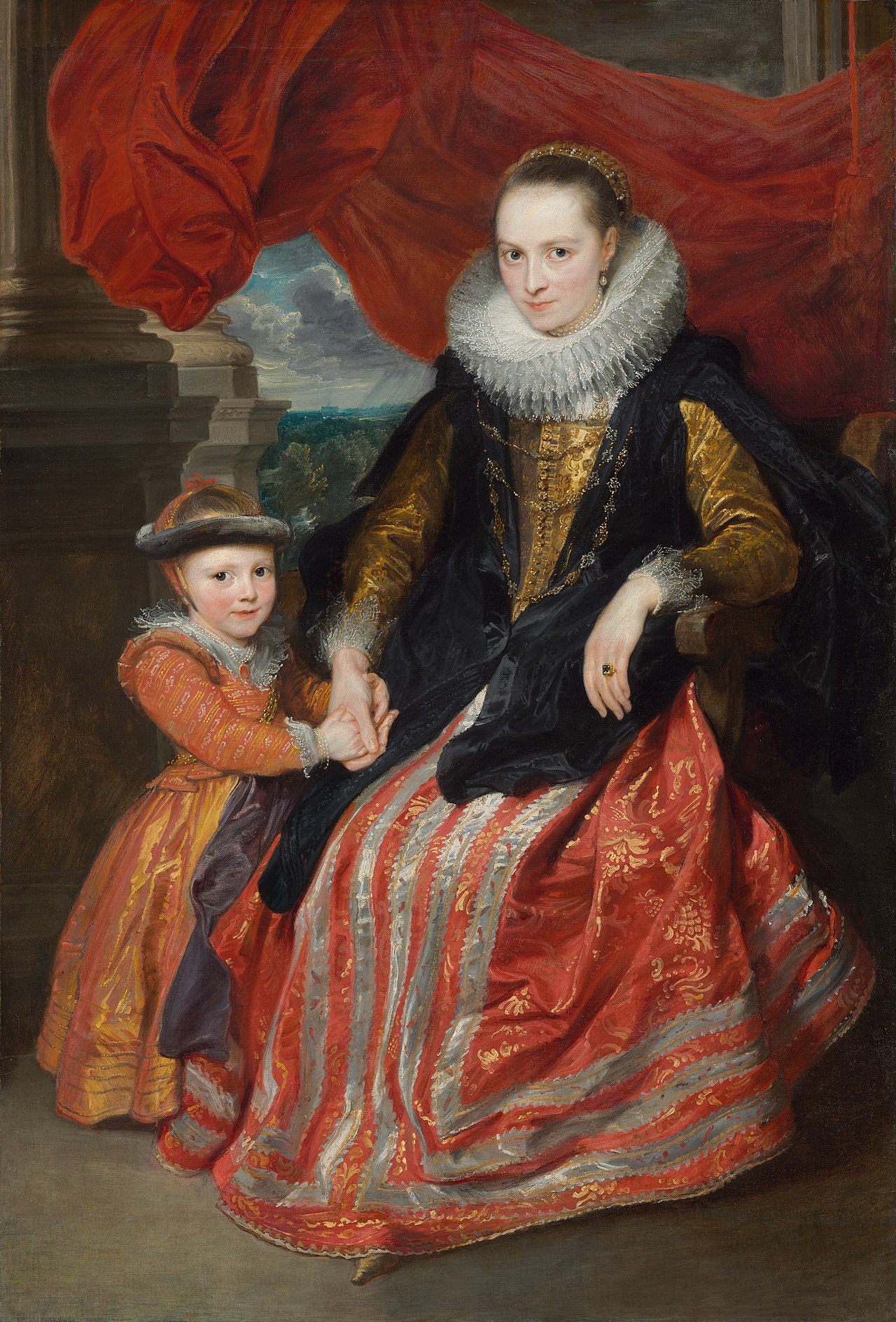
Susanna Fourment and Her Daughter 1621
Painted in Antwerp just before Van Dyck's departure for Italy, this double portrait — oil on panel, approximately 172 × 118 cm, now in the National Gallery of Art in Washington — shows Susanna Fourment, elder sister of Helena Fourment who would later marry Rubens, with one of her daughters. The work is remarkable for what it anticipates. The handling of Susanna's dark velvet dress against the lighter background, the precise notation of the lace at her wrists and collar, the way her gaze meets the viewer with a directness that is simultaneously welcoming and composed — all of this looks forward to the great English portraits of the 1630s. The child beside her provides a secondary focal point that softens the formal rigour of the image without sentimentalising it. Van Dyck understood from the beginning that portraiture was a negotiation between the sitter's social self-presentation and the painter's analytical intelligence, and this early masterpiece shows that negotiation already running at a high level of sophistication.