Artemisia Gentileschi
She painted women who act — who kill, who judge, who refuse to be victims — and she painted them better than almost anyone.
Style and technique
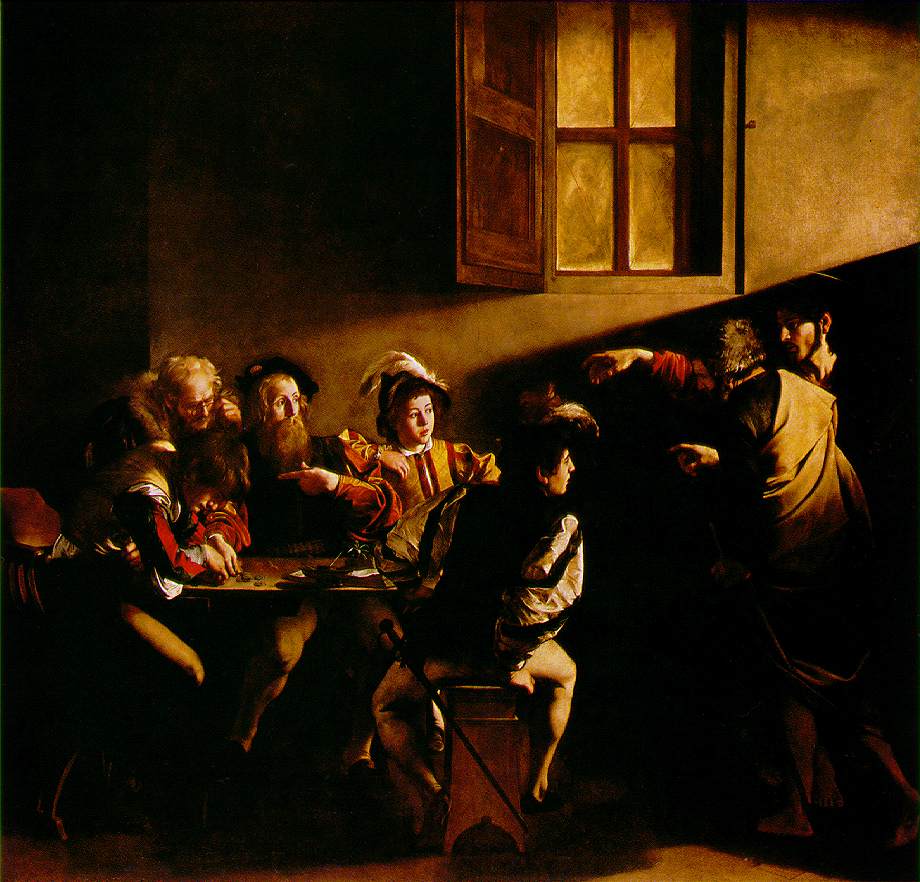
Gentileschi came directly out of the tradition her father Orazio Gentileschi had established — a refined version of Caravaggio's chiaroscuro, lighter in palette than Caravaggio himself but equally committed to the use of darkness as a compositional and emotional force. She learned this tradition from the inside, in her father's studio, and by the time she was seventeen she was painting works that matched and sometimes exceeded his.
What distinguishes her work from the broader Caravaggesque tradition is the nature of its subjects and the way those subjects are handled. She returned repeatedly to female protagonists from the Old Testament and from classical history — Judith, Susanna, Esther, Lucretia, Mary Magdalene — and painted them with a specificity and physical authority that has no real equivalent in the male painters of the period. Her Judith does not merely hold the sword or look away; she works, her hands and arms engaged in the physical effort of the act.
The figures in her paintings occupy real space and have real weight. The chiaroscuro is not merely dramatic lighting but a tool for making surfaces — skin, cloth, metal — palpably present. Her paint handling is confident and economical; she does not labour surfaces or fuss with detail for its own sake.
Four fingerprints: strong chiaroscuro derived from Caravaggio but warmer and more controlled, women who act rather than endure in the central roles of biblical and mythological narratives, physical specificity in figures — the weight of arms, the tension in hands — that grounds even the most extreme dramatic moment in bodily reality, and a warm palette of red, gold, and deep brown that gives her canvases a different emotional temperature from the colder Caravaggists.
Life and legacy
Gentileschi was born on 8 July 1593 in Rome, the eldest child of Orazio Gentileschi, a painter who was one of the most important followers of Caravaggio. Her mother died when she was twelve, and Orazio — who had no sons with artistic ability — trained her in his studio. By her mid-teens she was working alongside him and beginning to develop her own direction.
In 1611, when she was seventeen, she was raped by Agostino Tassi, a painter her father had hired to teach her perspective. Orazio Gentileschi took the case to court. The trial lasted seven months; Artemisia was subjected to torture — the strappado — to verify the truthfulness of her testimony. Tassi was convicted but the sentence was never enforced. She was married off to a Florentine painter, Pierantonio Stiattesi, shortly after, and moved to Florence.
In Florence she built a career of exceptional distinction. She was admitted to the Florentine Academy of the Arts and Design in 1616 — the first woman ever accorded this honour. She received patronage from Cosimo II de' Medici and his court, moved in artistic and intellectual circles that included Galileo, and developed the direct, physically forceful style that defines her mature work.
The Judith paintings — there are several versions — were made in Florence. Whether they carry autobiographical weight is a question that has occupied scholars for decades. The physical intensity of the act they depict, and the specificity with which the physical effort is rendered, exceeds anything required by the subject alone.
After Florence she worked in Genoa, Rome, Venice, and finally Naples, where she spent most of the last decades of her life. She was summoned to London in 1638 to assist her father, who was working for Charles I, and stayed for roughly three years. In Naples she ran a studio, took on assistants, and managed a practice large enough to fulfil important commissions for churches and noble patrons.
Her reputation faded after her death and she was largely forgotten until the twentieth century, when feminist art history recovered and reassessed her work.
Five famous paintings
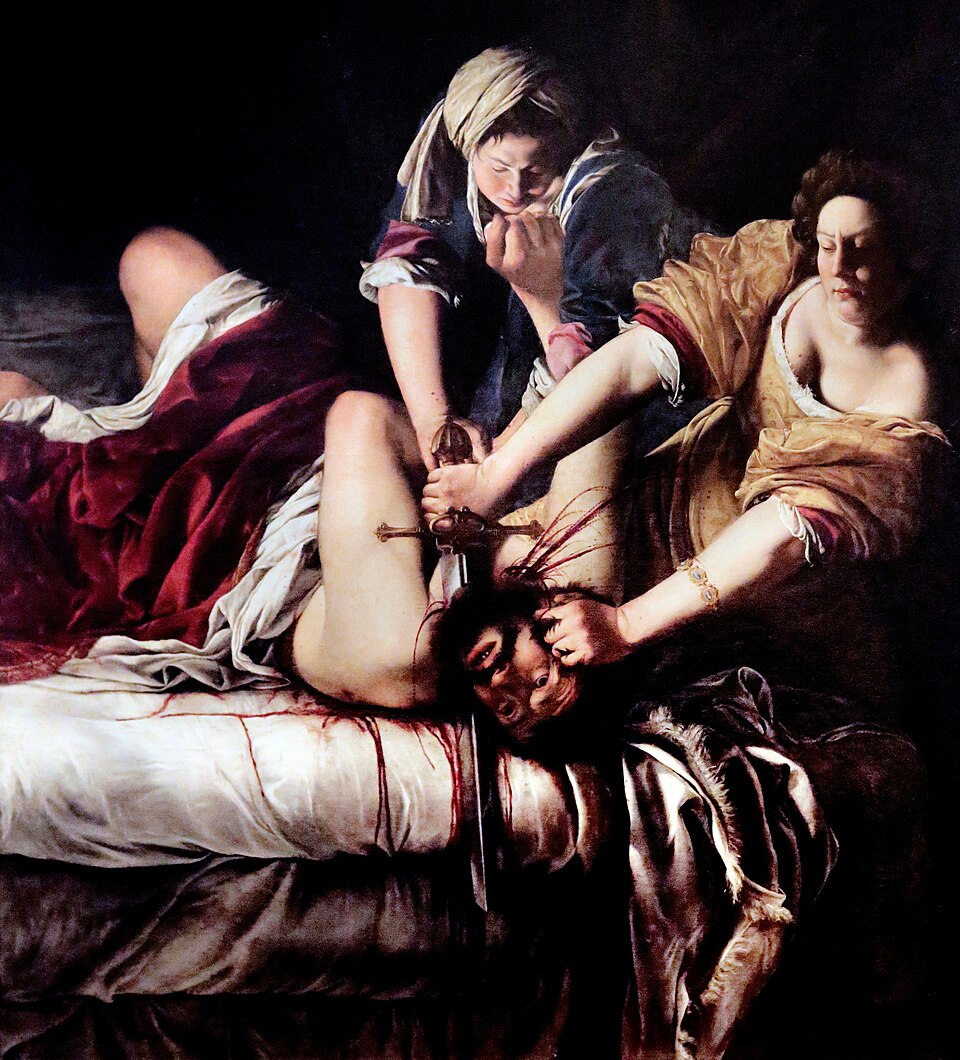
Judith Beheading Holofernes 1620
The most powerful of her several versions of the subject, and one of the most physically intense paintings of the seventeenth century. Judith and her maidservant Abra press Holofernes down onto the bed; Judith's sword is drawn across his neck, the act in progress rather than completed or about to begin. The physical effort is explicit: Judith's arms are engaged, her hands grip sword and hair, her face is concentrated and calm. The maidservant holds Holofernes with both hands. The blood is abundant and specific. The chiaroscuro is at its most dramatic — the scene lit from below and to the left, throwing deep shadows across the figures. It is in the Uffizi Gallery in Florence.
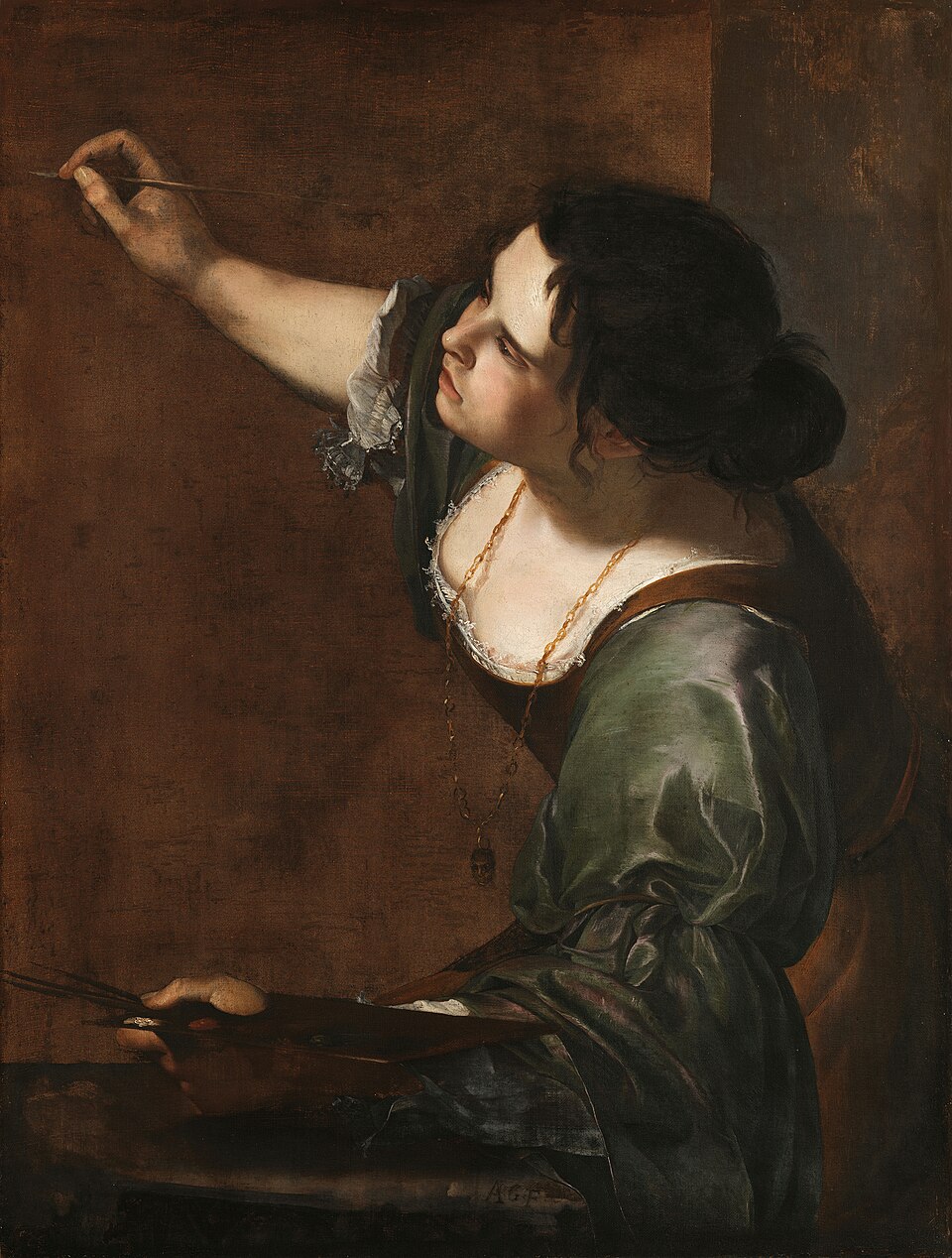
Self-Portrait as the Allegory of Painting 1639
A technically inventive work in which she takes on the traditional allegorical figure of Painting — La Pittura — and shows her in the act of painting: the figure's back is three-quarter turned to the viewer, one arm raised with the brush, the other steadying the palette. The face is slightly turned, not toward the viewer but toward the canvas she is working on. The work is at once a self-portrait, an allegory, and a demonstration of skill — the difficult foreshortened arm, the complex hair, the rich dark costume all presented with complete assurance. It is in the Royal Collection at Hampton Court.
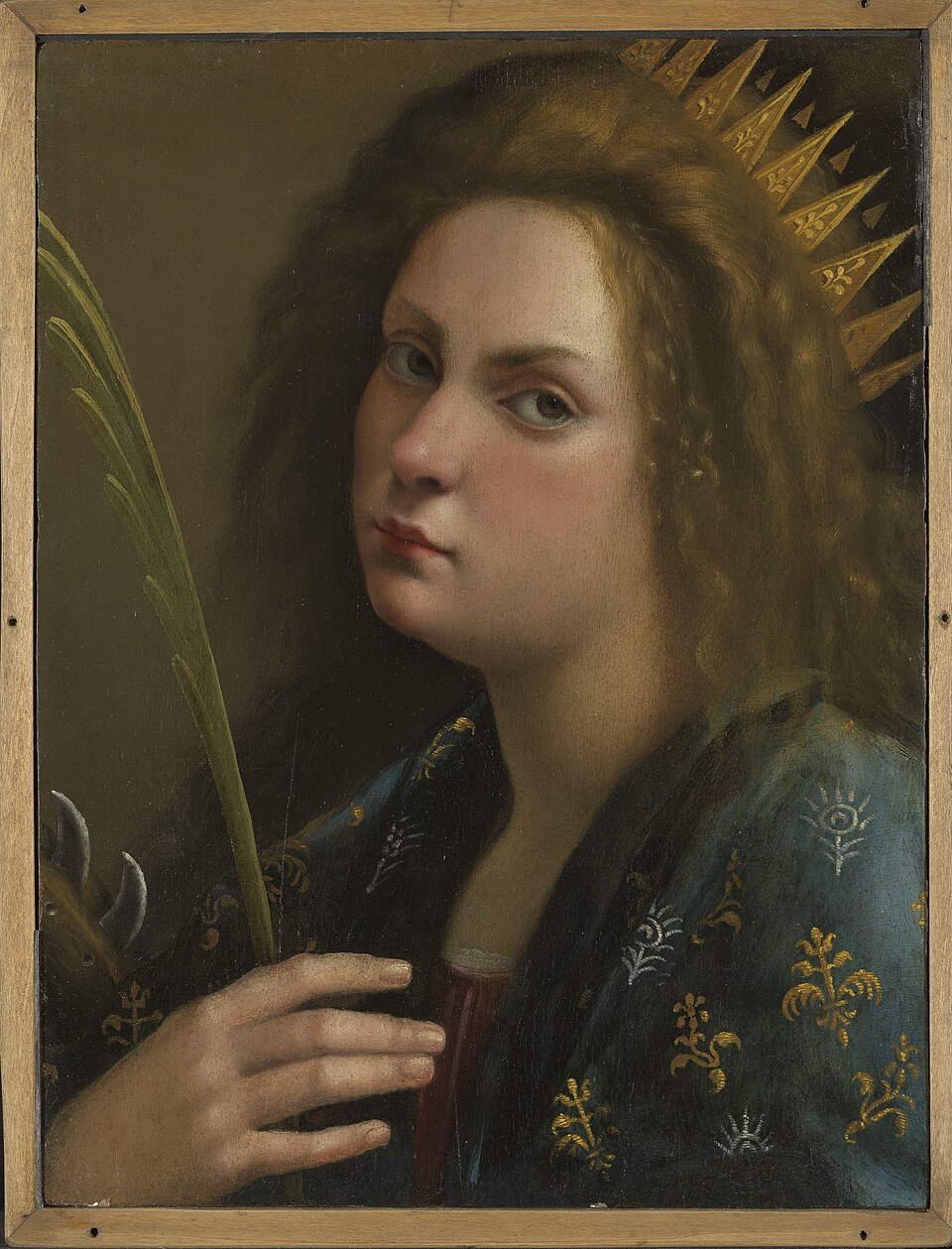
Self-Portrait as Saint Catherine of Alexandria 1616
A relatively early work in which she portrays herself as the martyr saint, holding the palm of martyrdom and resting her arm on the spiked wheel that is Catherine's attribute. The figure is powerful rather than saintly in the conventional sense — broad shoulders, direct gaze, a quality of physical presence that suggests the subject is not primarily interested in appearing martyred. The Florentine period's warm palette and controlled chiaroscuro are both in evidence. It is in the National Gallery in London.
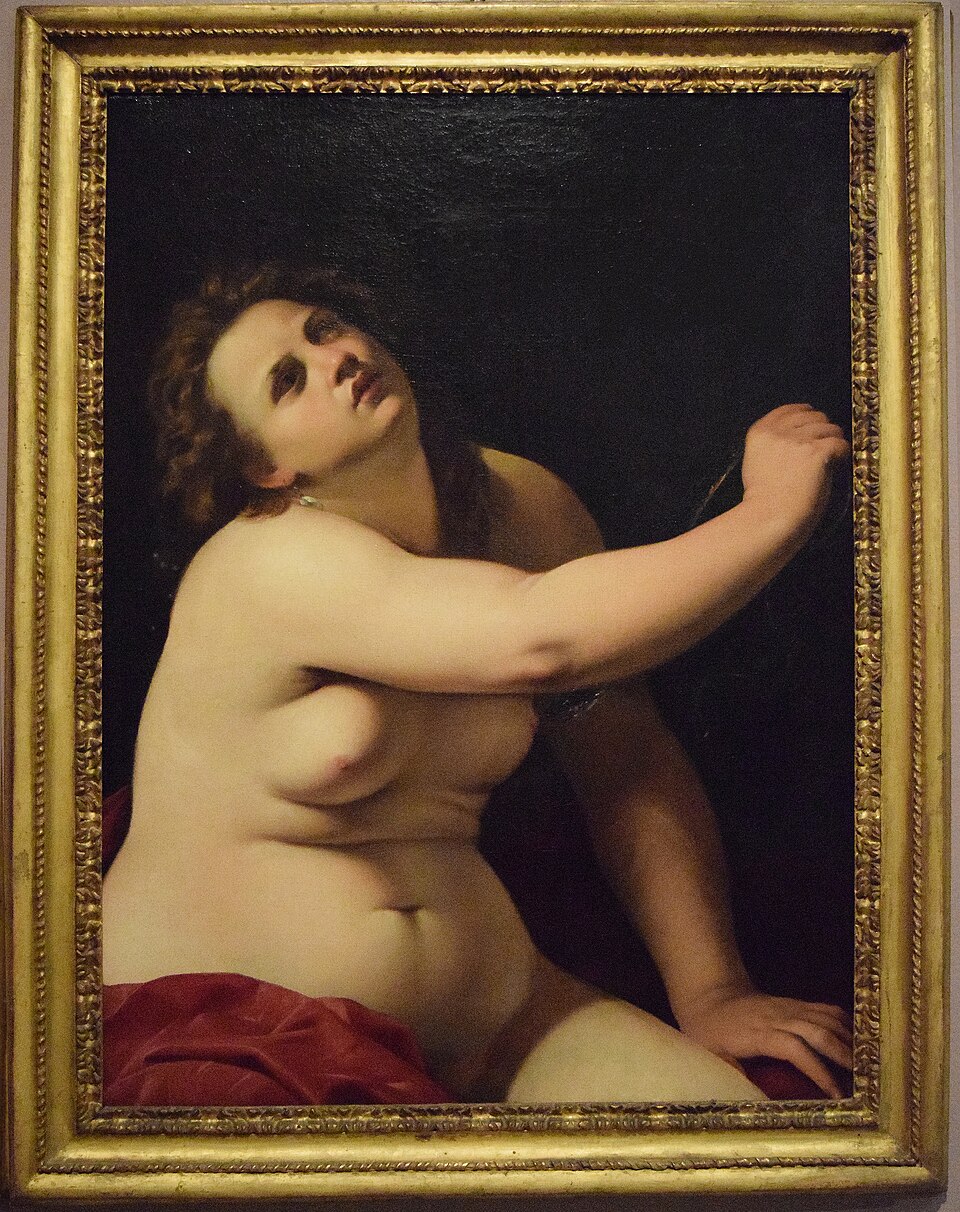
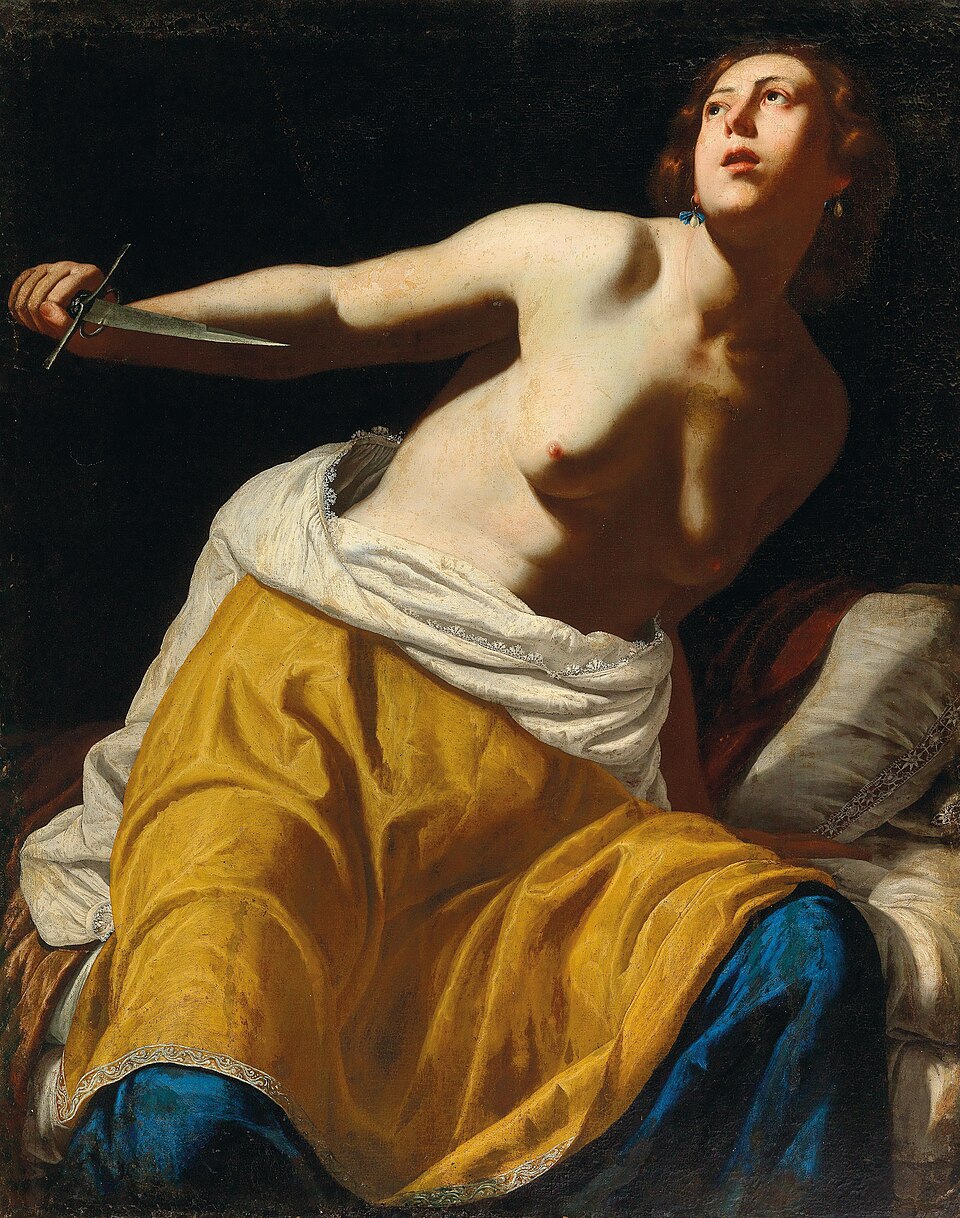
Lucretia 1625
The Roman noblewoman who stabbed herself after being raped by Tarquinius is shown at the moment before the act — or possibly during it — her face turned upward, one hand holding a dagger at her breast. The figure is half-draped, the body powerful and present; the expression is not anguished but resolute, the kind of composure that follows a decision already made. The painting belongs to a group of Gentileschi's works depicting women at moments of extreme self-determination. The composition is deliberately simple — figure against dark background — concentrating all weight on the face and the gesture.
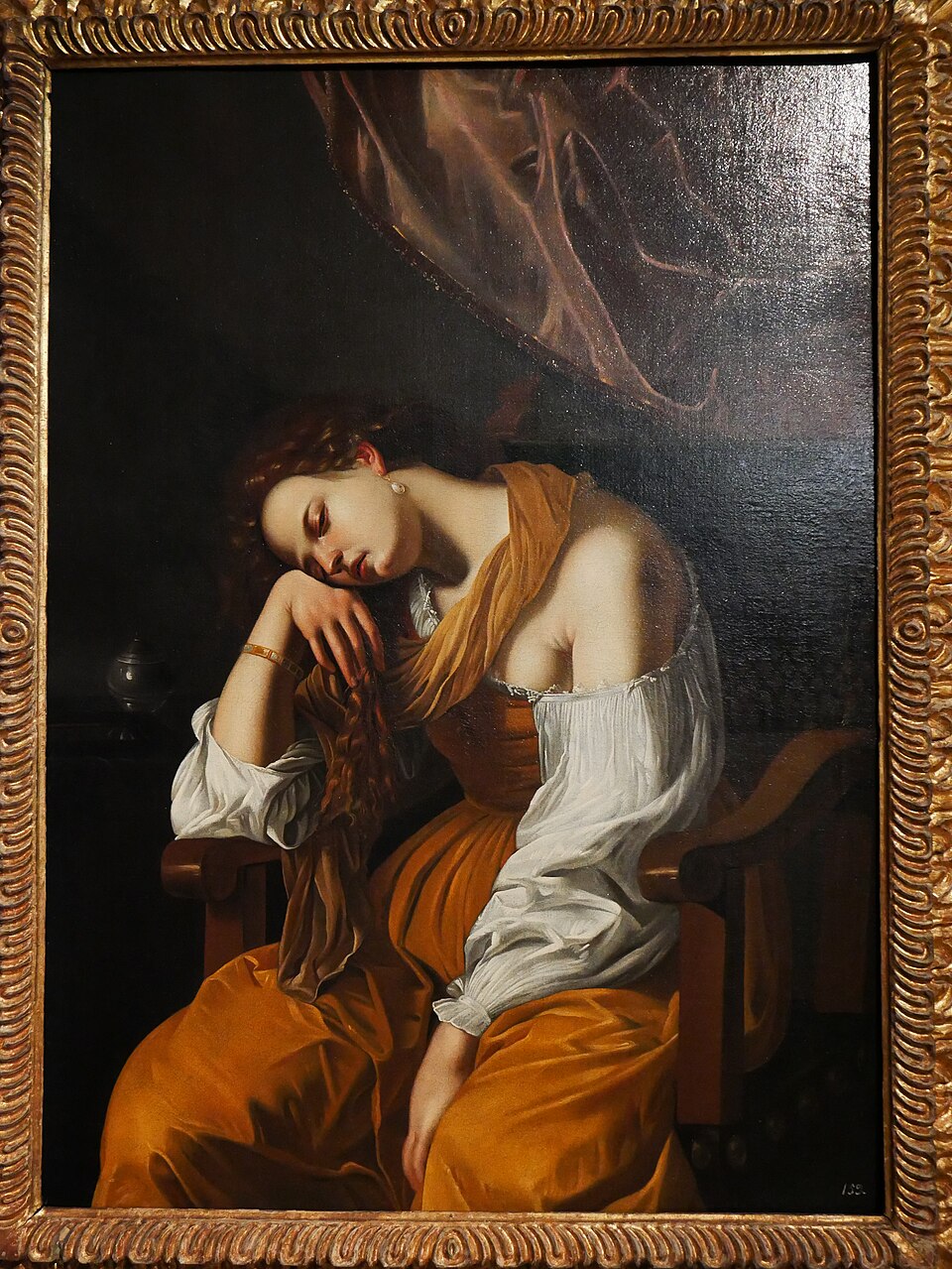
Mary Magdalene as Melancholy 1622
An unusual work in her output — instead of a scene of action or self-assertion, she shows the Magdalene in a state of absorbed melancholy, seated with her head drooping to one side, eyes downcast, her body as if exhausted by feeling. The Magdalene here is neither penitent nor triumphant but simply tired — a very human state that gives this religious subject an unusual psychological depth. The handling of light on the figure's skin and the rich red dress is among the most refined passages in her surviving work.