The hidden brain in Michelangelo's Creation of Adam
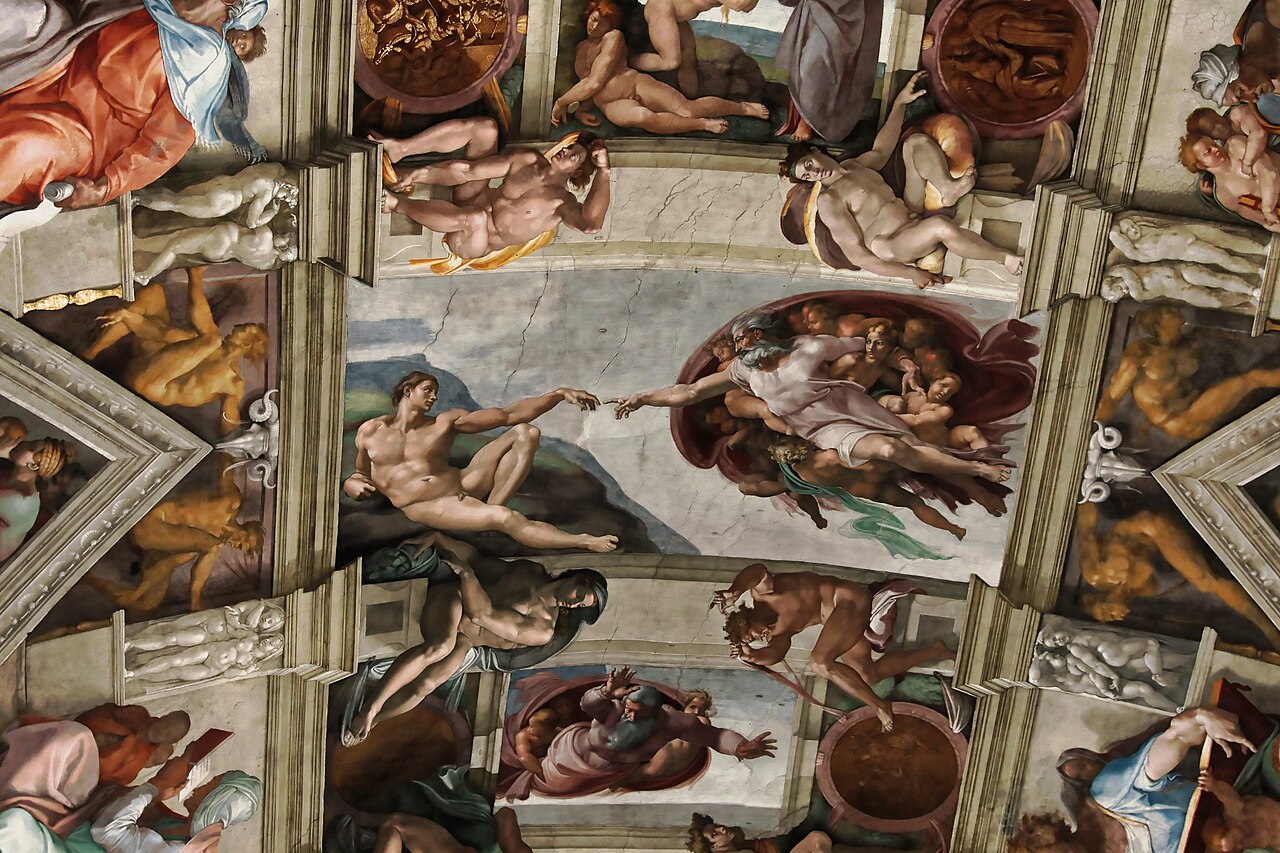
Look behind God, not at him. The shape that frames the most famous fingers in art is, anatomically, a human brain — and once you see it you can't unsee it.
Everyone knows the fingers. God's and Adam's, reaching across a sliver of sky, not quite meeting — the most reproduced gesture in Western art, printed on everything from museum mugs to phone cases. But stare too long at the hands and you miss the real trick. It isn't in them at all. It's in the shape that carries God.
A cloak shaped like a brain
Look at the billowing red drapery framing God and the cluster of angels. In 1990 a physician, Frank Lynn Meshberger, published a paper arguing that its outline maps — with unsettling precision — onto a cross-section of the human brain. Trace it and the parts fall into place: the outer curve of the cerebrum, a folded frontal lobe, the brain stem trailing down as a green sash, even the pituitary gland tucked where it should be.
The spark God passes to Adam may not be life at all — but the mind.
The anatomy Michelangelo knew
As a teenager, Michelangelo was granted access to corpses at the church of Santo Spirito in Florence and dissected them to study muscle and bone — anatomical work almost no other painter of his day attempted.
That is why the resemblance is so hard to wave away. This was not a decorator guessing at folds; Michelangelo understood the body from the inside. On a ceiling painted with this much anatomical control, "happy accident" is a tough sell.
Read as a message
If the brain is deliberate, the theology tilts. The spark God extends to Adam stops being merely biological life and becomes intellect — reason, imagination, the very capacity to conceive of God. Divinity handing humanity the one faculty that lets it imagine divinity. For a chapel ceiling, that is a quietly radical idea.
Could you spot a Michelangelo?
Hidden details are how you learn to recognise a painter's hand. Test your eye against 1,200+ paintings from 80+ masters.
Play the quiz →Not the only trick on the ceiling
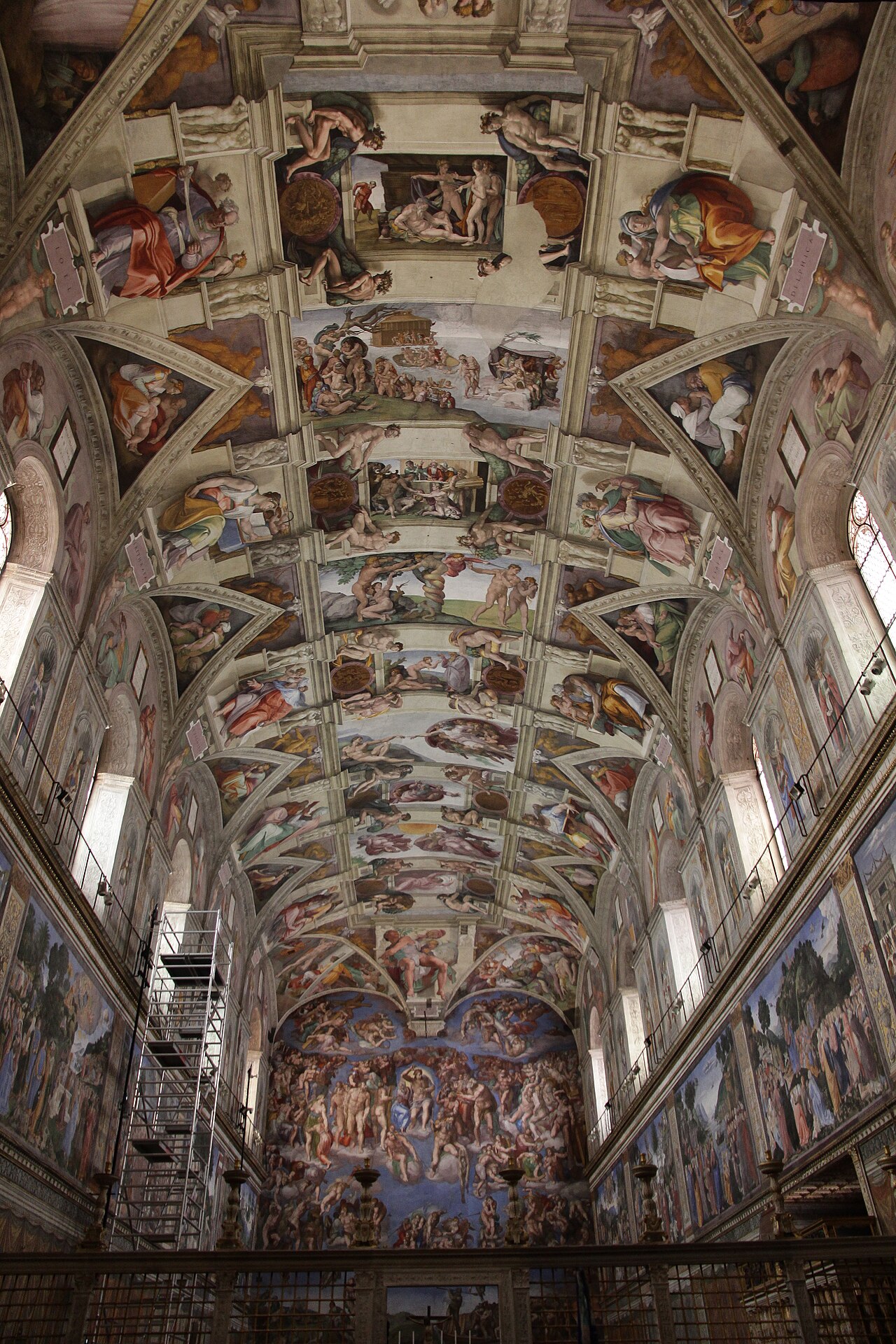
Michelangelo had form when it came to hiding things in plain sight. Elsewhere on the same vault he gave the prophet Zechariah the face of Pope Julius II — the patron he clashed with for years — and slipped a small, rude gesture into the pair of cherubs peering over the pope's shoulder. The Sistine ceiling is far less solemn than four centuries of reverence suggest.
So — coincidence, or code?
Here's the honest part: Michelangelo left no note. No letter, no sketch, no confession that reads "this is a brain." Scholars still split into camps — a buried anatomical manifesto, or a magnificently painted cloak that merely rhymes with one. That unresolved tension is exactly why the picture keeps its grip. Great paintings reward the second look, and the third. Next time you meet the Creation of Adam, give the famous fingers their moment — then look behind God, and decide for yourself.
More by Michelangelo